Wesbell Electronics
Electrical Wire and Cable Blog Romex Cable MC Cable UFB Cable


NM-B Electrical Wire Information

NMB Electrical WireNM-B electrical wire is a very popular type of cable used throughout homes and buildings to bring power from the electrical box to the lights, outlets and appliances. The 14, 12 and 10 AWG circuit sizes are the most common household electrical cables because of the amount of AMPS they offer. Different manufacturers engineer different types of NM-B cable but all types must still meet a certain standard noted in the NEC or National Electric Code.

NM-B Circuit Sizes

NM-B electrical wire circuit sizes are the smallest 3 sizes which are 14, 12 and 10 AWG. The 14 AWG NM-B cables have a white outer jacket, the 12 AWG cables have a yellow jacket and the 10 AWG cables have an orange jacket to set them apart. These three cables run from the electrical box in your home, through the walls to your lights, outlets and appliance outlets. All you will see is an outlet or a light assembly instead of any wiring. Once you pull off the outlet casing you will see the wiring behind it.

Southwire Brand Romex® NM-B Cable

Romex® is a brand name of NM-B cable that Southwire manufactures. It’s similar to buying the brand name of Kleenex® instead of another brand of tissues. It needs to be manufactured to the same specifications per the NEC code but it can be enhanced. Therefore, buying another brand should suffice but buying a premium brand can sometimes lengthen the life of your electrical cable.

Larger Sizes of NM-B Electrical Wire

Larger sizes of NM-B cable refer to 8 AWG through 2 AWG with two or three possible conductors. The bare copper ground wire is additional and not noted when you see: NM-B 6/3. A 6/3 electrical wire will have 3 insulated conductors that are color coded and an additional ground wire without insulation. These cables are more often used to hook up an indoor hot tub, a large appliance or indoor shop equipment. They aren’t flexible at all and cannot be used outdoors either. Therefore, the entire connection must remain indoors if you plan on using NM-B cable or Romex® cable.

Knowledge is power in nearly every industry. Having the knowledge of a subject will allow you to buy and sell in an educated fashion. For instance, understanding that NM-B cables are priced based on the value of copper as a commodity, will allow a savvy buyer to purchase their copper cables at the correct time rather than just replacing a cable when the time comes up.

Written by: Chris Bell
www.wesbellwireandcable.com/blog

Copper MC Cable Information

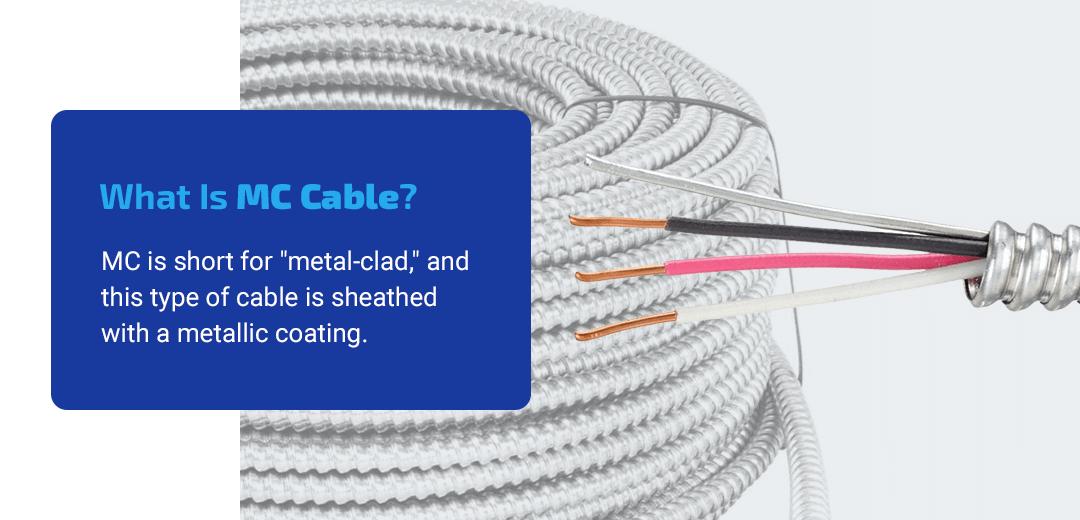
MC CableMC stands for Metal Clad which is derived from the aluminum armor that wraps around the conductors. Copper strands are used to conduct electricity, THHN insulation is used to protect the copper and aluminum armor is used as a jacket instead of duct for indoor applications. Copper MC cables also have industry approvals that allow it to pass inspection per the NEC code.

Copper Strands

Electrical cables are those used in homes and buildings either bringing power to the building or supplying smaller amounts of power throughout the building. Electrical cables are typically manufactured with stiff copper strands because it helps during the installation process. Pushing flexible cables through conduit and duct is difficult because it will bunch and get stuck. Stiff MC cable can be used indoors without conduit, outdoors and underground when in conduit or raceway. The only environmental application not safe for MC cables is directly underground because they don’t have enough protection.

In order to install a copper MC cable underground you will need to get the additional PVC jacket. The construction is exactly the same with an additional PVC jacket to create a water tight jacket and a cable available for direct burial applications.

THHN THWN Insulation

The term “insulation” is used to describe what covers the copper strands and the term “jacket” is used to describe the outer wrapping that covers all of the wires inside the cable. The MC cable conductors are covered with THHN THWN approved insulation. THHN stands for Thermoplastic High Heat Nylon which describes the materials used and protection it’s exerting. So, depending on the amount of conductors your cable has, 2, 3 or 4 THHN wires are bundled together and wrapped with aluminum interlocked armor.

Aluminum Interlocked Armor

The metal clad jacket, named aluminum interlocked armor, is very different compared to standard types of electrical cable jackets. It was designed to be used indoors for applications that require a cable and conduit together. MC cable is approved as a “cable and conduit” in one for indoor applications. It will pass inspection with approved THHN THWN wires and an approved metal clad jacket. MC cables can also be used outdoors and in conduit underground when necessary.

Please speak to your wire and cable supplier before making an electrical cable purchase. They can help match the most cost effective cable for your installation based on the environment it will be placed in. Getting an approved cable at the right price is what most contractors, electricians and installers want when they’re in search for copper cables.

Written by: Chris Bell
chris@wesbellinc.com
Buy MC Cable here >>

600 Volt Unshielded Electronic Cables

Unshielded Electronic CableUnshielded electronic cables are those with multiple lead wires bundled together and wrapped with an overall jacket. A shielded electronic cable will also have a foil or braid shield between the lead wires and the jacket to block EMI (Electromagnetic Interference) when cables run side by side in an installation. The biggest difference between the various 600 volt unshielded cables lies in the type of protection the jacket offers which, in turn, describes where it can be installed without being damaged by its environment.

600 Volt PVC Electronic Cables

PVC (Polyvinyl Chloride) lead wires inside of a PVC insulated jacket is the most basic, low cost, electronic cable that you can purchase. Common applications for PVC cables are intercoms, public address systems, remote control circuits and related environmental applications. These types of electronic cables are most likely used indoors because the outdoor environmental conditions will be too tough for the basic PVC jacket.

600 Volt Fire Alarm Cable

Fire Alarm CableFire alarm cables typically come with a red jacket but there are various colors available depending on our inventory levels. They are commonly used to install fire alarms, security systems and other similar communication applications. These are manufactured with a PVC jacket or a Plenum jacket. The plenum jacket is used when the installation is in plenum or any type of above head duct for fire protection reasons.

600 Volt STJ Teflon Cables

Unfortunately, STJ cables only come in a shielded version because the amount of heat used to wrap the jacket around the conductors would melt the insulation of the lead wires during the process. Therefore, a shield is placed between the lead wires and the jacket to limit the amount of heat hitting the insulation of the wires. STJ stands for Shielded Tape Jacket and it’s an upgrade from PVC cables because it can handle applications with a temperature rating of up to 200ºC compared to 105ºC. STJ Teflon cables usually have a white tape wrapped jacket but also have the option of FEP extruded insulation which is not wrapped.

There are many different types of 600 volt unshielded electronic cables available in multi conductor, multi pair, higher voltage and higher temperature for each different type of installation. There are also jackets that are manufactured with more protection for severe weather and severe impact. Standard cables have been known to end up with cracked insulation and damaged conductors quicker than expected so it’s worth it to purchase a heavy duty cable when necessary for the application.

Written by: Chris Bell
chris@wesbellinc.com
ISO 9001 Certified

Alpha TEFLON® High Temperature Electrical Wire

Alpha Teflon WireAlpha Wire engineers and manufactures Certified Performance High Reliability TFE TEFLON® insulated electrical wire for high temperature applications. It has all of the necessary approvals needed to meet Type E, M16878/4 and UL1213 specifications for 600 volts and 200ºC. Alpha stocks many different gauge sizes, color options and spool sizes to fit the needs of its customers.

Alpha Wire is a manufacturer that doesn’t sell to the general public. They take on distributors of wire and cable that need to meet certain dollar amounts in sales each year in order to remain a stocking supplier of their material. Alpha is known for manufacturing performance enhanced wire and cable that’s slightly advanced to its competitors in order to develop a brand name product.

TFE TEFLON® high temperature electrical wire (Buy here) comes in AWG (American Wire Gauge) sizes 30 through 10 depending on the amount of amperage you need to support. The voltage, temperature rating and applications remain the same because the insulation over the copper remains the same. The difference between each gauge size lies in the amount of copper which directly relates to the amount of power your application needs.

Alpha’s TFE TEFLON® wire is an upgrade to standard PVC insulated hook up wire because of the temperature increase. PVC wire is rated for 105ºC while TFE TEFLON® wire is rated for 200ºC due to the specially engineered TFE insulation. This particular high temperature wire meets the Military Specification M16878/4 but you can upgrade once again to the M16878/5 for the same wire with a 1000 volt rating.

Also known as Type E, M16878/4 insulation will resist all chemicals; have low coefficient of friction and outstanding electrical properties in applications reaching up to 200ºC. TEFLON® wire is commonly used in military harnessing, medical electronics, power supply lead wire and appliance wiring when temperatures get higher than 105ºC and as high as 200ºC.

There are also flexibility differences between the 7 strand and 19 strand options. For instance, Alpha 5853 and Alpha 5853/19 are both 26 AWG Type E wires but 5853 has 7 strands of 34 AWG copper and 5853/19 has 19 strands of 38 AWG copper. Both equate to the same diameter to exert the same amount of amperage but the smaller copper strands used in Alpha 5853/19 create more flexibility for the user during the assembly process.

Make sure you speak to your wire and cable supplier to make sure that you need this particular type of electrical wire. There are many options for hook up wire out there with all different price differences that match their abilities to perform. Buying the correct type of wire could save you money or aware you of the fact that you’re not quite buying enough to fit your application.

Written by: Chris Bell
chris@wesbellinc.com
www.wesbellwireandcable.com

Electronic Cable For Wiring Of OEM Equipment

OEM Electronic CablesElectronic cables for OEM equipment come in many variations due to voltage, conductors and shielding differences. If you can use an unshielded cable compared to a shielded cable you’re going to save some money, so make sure you understand the application before you purchase your cable, unless you’ve already consulted with an electrician.

Alpha Wire XTRA GUARD® 1 cables are ideal for OEM equipment because they’re flame and moisture resistant, color coded and covered with an extra premium grade PVC jacket for added life. Specifically, their applications include high technology applications, medical equipment, point-of-sale equipment, computer peripherals and industrial process controls.

Electronic Cable Voltage

OEM equipment cables are typically manufactured in 300 or 600 volts with as many as 60 conductors inside of a single cable. The jacket thickness of a 300 volts cable is .032” compared to the jacket thickness of a 600 volt cable at .063”. You’ll have to make sure the cable track can handle the additional diameter of the 600 volt electronic cable.

Shielding For OEM Equipment

A shield is needed when cables run next to each other in cable track because there is EMI (Electromechanical Interference) which can hurt the performance of the conductors. Electronic cables for OEM equipment come in unshielded, Foil shielded and Braid/Foil shielded. A foil shield is a basic way to block small amounts of EMI, such as running two cables next to each other. A Braid/Foil shield is required when multiple cables run together in cable track creating a much higher rate of EMI that needs to be limited with the shielding.

Conductors and Pairs

You might hear the term “multi conductor” which means more than one wire inside of the cable. “Stranding” is mentioned when discussing the very thin copper strands inside each wire of the cable. A “multi pair” cable has pairs of two conductors twisted together which also blocks EMI. So, a 4 conductor electronic cable will have a total of 4 wires inside while a 4 pair cable will have a total of 8 wires inside with each pair twisted together. Many twisted pair cables also have a shield covering each pair along with an overall shield for very high amounts of EMI.

We higher recommend Alpha XTRA GUARD® electronic cables for OEM equipment installations. They have engineers that devote a lot of time to making sure their cables outlast the competition and provide the absolute best performance while running the equipment.

Written by: Chris Bell
chris@wesbellinc.com
www.wesbellwireandcable.com

Carolprene® Welding Cable – General Cable Brand

General Cable engineers and manufactures their brand of Carolprene® welding cable. Carolprene® is their special version of a rubber Neoprene insulation that has been slightly enhanced by the engineers as General Cable.

Standard welding cable used in garages and small shops don’t require all of the special approvals that industrial job sites require such as UL, CSA and MSHA. Well, without those approvals there isn’t any third party source approving, or disapproving, the way that the welding cable is manufactured. That’s one of the reasons General Cable wants to brand their product with a Carolprene® trade mark to prove its quality.

How Do You Know If You Are Getting Quality Welding Cable?

Carolprene Welding CableThe copper stranding and insulation are the two biggest parts to look at when buying welding cable. Buying a Carolprene® product will assure you of the quality because they have a brand name to uphold. Otherwise, make sure it’s Class K stranding which uses 30 AWG copper strands as a flexibility enhancer. Second, make sure it has rubber EPDM, or Neoprene, insulation instead of Thermoplastic. Thermoplastic insulation is exactly what it sounds like, plastic. It’s cheaper and it can be used as an alternative if your application can handle the lower quality but it’s not recommended for most welding applications.

Upgrade From Carolprene® to Super Vu-Tron®

Super Vu-Tron® is also a brand name owned by General Cable. It’s an upgrade to Carolprene® because it has Class M 34 AWG stranding for added flexibility and a stronger insulation for industrial applications that withstands a lot more impact each day. Super Vu-Tron welding cables are only manufactured in orange and they’re supplied with UL, CSA and MSHA markings on the insulation. Due to the upgraded insulation these can also handle more AMPS per gauge size. A 6 AWG welding cable is rated for 75 AMPS and a Super Vu-Tron 6 AWG cable is rated for 100 AMPS.

There are plenty of manufacturers that will make a great cable with similar materials as the Carolprene® product. However, buying the Carolprene® name will assure you of the quality and leave all questioning aside. Buying a basic welding cable without a top manufacturer’s name attached to it could be the reason your cable isn’t handling well against the daily conditions it’s exposed to.

Written by: Chris Bell
chris@wesbellinc.com
ISO 9001 Certified

Types of Tray Cable Explained

The term “tray cable” was developed through its installation in cable tray. Each type of insulation is engineered to be able to withstand some type of environmental condition that could possibly damage the copper underneath it. In cable tray, insulation would come in contact with moisture, oils and solvents and if it’s not protective enough to withstand those things the copper could be affected.

The first two things to determine about your tray cable will be the voltage and the shielding. There is a 300 volt version called PLTC (Power Limited Tray Cable) and a 600 volt “tray cable” for applications requiring more power. There are three versions of shielding that are offered including unshielded, shielded and individually shielded.

Tray Cable Shielding

Shielded Tray CableAn unshielded tray cable is the cheapest and most basic version you can get if your application doesn’t need to block EMI (Electromechanical Interference). When two cables run next to each other in tray or duct there can be a certain amount of interference which is blocked with a shield over the conductors. An aluminum foil polyester shield wraps around all of the conductors to limit the amount of EMI. To picture it in your mind, imagine a glowing circumference pulsating around each of the cables. When they connect there’s “interference” so the shielding shrinks that circumference to limit the amount of interference.

Shielded Tray CableAn individually shielded tray cable has a shield around each pair of wires inside the cable. So a “3 pair” cable has an individual shield around each pair and an overall shield wrapping around all of the conductors together. This is needed when each pair can interfere with each other. The shield will limit the EMI between each set of two wires so that there is a clean signal passing through.

Flexible Tray Cables

Once you decide the voltage and the shielding for your tray cable you will just need to figure out the AWG (American Wire Gauge) and the amount of copper conductors. The flexibility remains the same throughout most tray cables because the installation types are nearly all the same. When a cable is being snaked through duct, or pushed through cable tray, added flexibility would only hurt the process. Therefore, most tray cables come with stiff copper strands to keep a firm hold during the installation in tray and duct.

There are plenty of flexible electronic cables available that are similar to tray cables that can be used if your installation is a bit different than the standard. So, make sure that the insulation with withstand everything that the cable will be exposed to and include the option of added flexibility to your cable. It will bend easier and wrap around corners easier but it will not be the best option for a cable installed in conduit or duct.

Written by: Chris Bell
chris@wesbellinc.com

Continuous Flexible Electronic Cables

The phrase “flexible cable” is sometimes misunderstood because there are different levels of flexibility depending on your application. Some cable catagories are more flexible than others (Electronic VS Electrical), but the individual cable may still be a less flexible option when compared to similar cables in its family.

Flexible Cables

Flexible Welding CableWelding cable is much more flexible than THHN electrical wire because they are used in completely different applications. However, standard welding cable is actually a less flexible option in the single conductor portable cord family. There is Class K and Class M stranding for welding cable which are “standard” and “extra flexible”. Class K stranding uses 30 AWG copper strands and Class M stranding uses, many more, 34 AWG copper strands to make a more flexible cable. Neither cable is a “continuous flexible cable” though. Click here to buy welding cable >>

Flexible Electronic Cables

Electronic cables are slightly different than the two types of cables mentioned above. Electronic cables are more commonly used indoors in machinery and equipment. These cables either send power to the equipment or they’re attached to the equipment sending power back and forth. A “flexible cable” can bend into place, circle around tight areas and remain still in the application. “Continuous flexible cables” will be moving back and forth while the machine is running.

Continuous Flexible Cables

Continuous Flexible CablesThe word “continuous” means that the cable, not only needs to be flexible, but also needs to be able to withstand the added damage of being twisted, bent and moved during the actual application. As the machine, or robot, is moving the cable will need to move as well. A typical electronic cable used in this application would be torn to shreds fairly quickly. These special continuous flexible cables are engineered to be able to move along with machine movements without having to be replaced in a year.

Flexibility

In terms of “bend ability” the amount of flexibility is determined by the size of copper strands used to manufacture the cable. As mentioned in the second paragraph, a welding cable with 34 AWG strands is more flexible than the welding cable with 30 AWG strands. A more dramatic difference to the naked eye would be the bend ability of a 20 AWG copper strand compared to an 8 AWG copper strand.

Obviously, the 20 AWG wire is easier to bend in your hand, so bundling multiple 20 AWG wires together to form the diameter of an 8 AWG wire would prove to be more flexible than the solid strand of 8 AWG. Remember, just because it’s more flexible doesn’t mean that it can be bent and twisted during the application. It simply means it can bend around corners better and easier than the less flexible option.

Written by: Chris Bell
chris@wesbellinc.com
www.wesbellwireandcable.com

Alpha Wire XTRA Guard® Cables

Alpha Wire is a manufacturer of electronic wire and cable that has branded their own XTRA Guard® cables. Other manufacturers might say they can manufacture something similar but it won’t contain all of the same elements used in the “real” XTRA Guard® cables. There are 6 versions of XTRA Guard® cables that will be listed and discussed below.

Alpha XTRA Guard® 1 Cables (Popular)

XTRA Guard® 1 cables are used in applications such as medical electronics, point of sale equipment, computer peripherals and industrial process controls. There are unshielded, shielded, SUPRASHIELD® and multi pair options to choose from. The SUPRASHIELD® is another Alpha branded product in place of a common foil/braid shield. It’s similar, but manufactured with Alpha’s own recipe. This version has an extreme premium grade PVC jacket rated at 300 or 600 volts and 80ºC.

XTRA GUARD 1 CableSee XTRA Guard® 1 here >>


Alpha XTRA Guard® 2 Cables

XTRA Guard® 2 cables are used in CNC machine centers, automotive assembly plant operations, military ground support systems and packaging machinery. This version offers the same shielding options as the 1 series. XTRA Guard® 2 has unmatched resistance to oils, fuels, solvents and water due to the industrial strength extra rugged polyurethane jacket. These cables are rated at 300 or 600 volts and 90ºC.

XTRA GUARD 2 CableSee XTRA Guard® 2 here >>


Alpha XTRA Guard® 3 Cables

XTRA Guard® 3 cables have an extra durable outdoor direct burial jacket so that it can be buried in the ground without the use of conduit or raceway. Common applications are inter building communications, satellite communications equipment, land irrigation systems and pipeline sensor controls. All of the variations of XTRA Guard® 3 cables have a voltage rating of 300 or 600 with a temperature rating of 80ºC.

XTRA GUARD 3 CableSee XTRA Guard® 3 here >>


Alpha XTRA Guard® 4 Cables (Popular)

XTRA Guard® 4 cables are commonly used in wood, paper, pulp and plant operations, mining instruments and controls, food and beverage plants and arctic pipeline controls. This version has unmatched performance in both high and low temperatures reaching as low as -60ºC and as high as 125ºC. Whether shielded or unshielded, the XTRA Guard® 4 cables have an extra protective high/low temperature TPE jacket.

XTRA GUARD 4 CableSee XTRA Guard® 4 here >>


Alpha XTRA Guard® 5 Cables

XTRA Guard® 5 cables are used in applications such as military electronic, steel, glass and metal foundries, mining instruments and controls and in food and beverage plants. With an extra high temperature and chemical resistant FEP jacket, XTRA Guard® 5 cables have unmatched performance at temperatures from -80ºC to 200ºC. This version only comes in 300 volts but still has all of the shielding options including the SUPRASHIELD®.

XTRA GUARD 5 CableSee XTRA Guard® 5 here >>


Alpha XTRA Guard® Flexible Cables (Popular)

The difference between “flexible cables” and “XTRA Guard® Flexible Cables” is more than just the brand name by Alpha Wire. A flexible cable can be bent into an application where an XTRA Guard® flexible cable can be bent back and forth while the machine is running. Some machines that move around will require the cable move with it, so this is the perfect cable to use for such an application. It’s stated in the catalog that it’s a “permanent solution for critical flexing applications” and it’s manufactured in the USA.

XTRA GUARD Flexible CableSee XTRA Guard® Flexible here >>


For questions about our XTRA Guard® cable by Alpha Wire please call us at (800) 334-8400.

Written by: Chris Bell
chris@wesbellinc.com
www.wesbellwireandcable.com

Is Copper Really Going Down?

Copper PricingYES! Copper has been slowly decreasing over the last 6 months bringing down the price of copper wire and cable. Copper is traded on the NYSE (New York Stock Exchange) which means the cost of copper goes up or down every day depending on the supply and demand. The cost of wire doesn’t automatically change based on the price of copper because there are other price drivers such as the insulation and the coating of tin, nickel or silver that is sometimes used over the copper strands.

Standard Hook Up Wire Pricing

“Standard hook up wire” refers to the most basic types used in the industry. PVC (Polyvinyl Chloride) is the most basic hookup wiring used in appliances and electronics. This particular type of wire has 3 price drives which are copper, tin and PVC insulation. The cost of each will change daily, copper being the most dramatic, which changes the cost of PVC hook up wire. So, if there is a 5% increase in PVC materials and a 5% decrease in the cost of copper, the price will probably remain the same.

TEFLON® PTFE Hook Up Wire Pricing

This type of hook up wire has 4 price drivers including copper, silver, PTFE insulation and TEFLON® compounds. PTFE refers to a high temperature insulation with many different materials used to manufacture it. TEFLON® is a group of elements used to withstand high temperatures and create a non-stick surface. Silver is used over the copper strands to resist corrosion when the wire is in applications with high temperatures. Buy TEFLON® here >>

SOOW Portable Power Cable

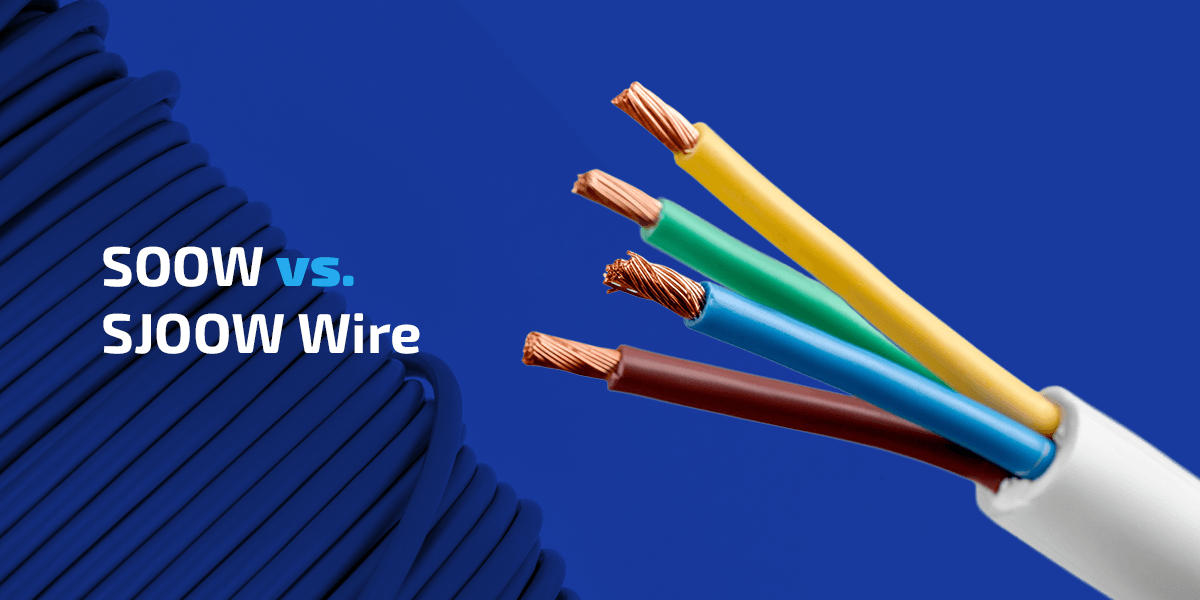
In order to understand the actual pricing of any electrical cable you must first understand the construction. SOOW cable is manufactured with very fine flexible strands, EPDM insulation over each conductor, EPDM rubber jacket and fillers in between each conductor to make sure the cable is perfectly round instead of hugging each conductor with a bumpy outside surface. Most sizes also have UL, CSA and MSHA approvals increasing the cost as well. So, just because copper is the most popular price driver as of now doesn’t mean it’s the only one. Your price may, or may not, be changed based on copper decreasing but if you’re unsure why please ask us the question!

On 3/27/2013 the price of copper per pound is $3.45/lb
On 3/27/2012 the price of copper per pound was $4.19/lb
On 3/27/2011 the price of copper per pound was $4.42/lb

OUR PRICES HAVE BEEN DROPPING!

Written by: Chris Bell
chris@wesbellinc.com
www.wesbellwireandcable.com

logo           Questions about WesBell products?